5 Ways to Host Clients on a Corporate Yacht Charter in Europe
A corporate yacht charter works when privacy, catering and guest capacity are planned together. Learn five ways to host clients at sea, from choosing the vessel to timing the itinerary across the Riviera, Balearics and Greece.
What does a corporate yacht charter need to get right when you are hosting clients at sea? Privacy, catering and guest capacity, settled together before any vessel is shortlisted. A private yacht charter gives a host a defined guest list, a single point of arrival and a schedule nobody else controls, whether boarding in Monaco, Palma or Mykonos. This guide explains how each of the three factors shapes the choice of yacht and route.
Why does privacy shape the whole brief?
Privacy on a yacht is partly the vessel and partly the position it takes. A berth on the quay at Port Hercule in Monaco or in the harbour at Saint-Tropez puts the yacht in plain view of promenades and neighbouring decks. An anchorage off Formentera or in a bay near Portofino changes who can see the aft deck and who can approach by tender.
Share the guest list and any confidentiality requirements with your broker at the start, so that berth, anchorage and boarding times follow from them. Ask how the layout separates guest areas from crew working areas, and how arrivals and departures will be handled. Privacy is arranged in the planning stage, not assumed once the lines are off.
How many guests can a private yacht really host?
Capacity has two meanings, and mixing them up causes most planning errors. Day capacity is the number of people aboard for a cruise and lunch. Sleeping capacity is the number who can stay overnight. Always confirm which figure applies to your format before invitations go out.
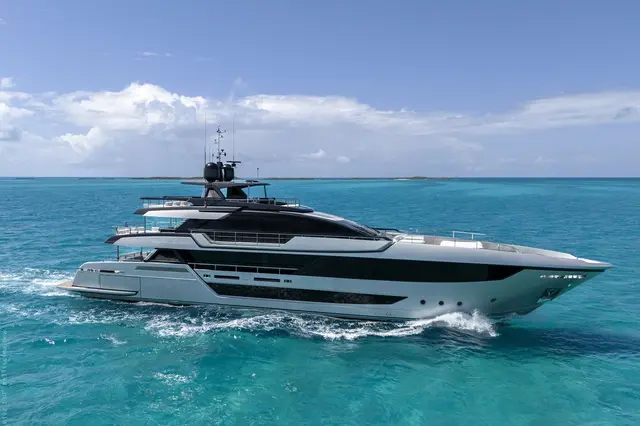
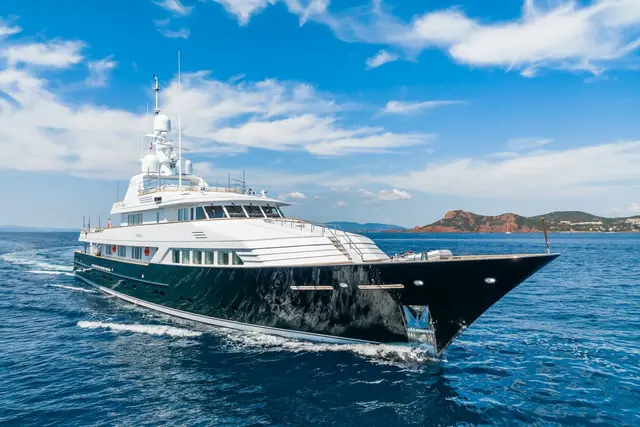
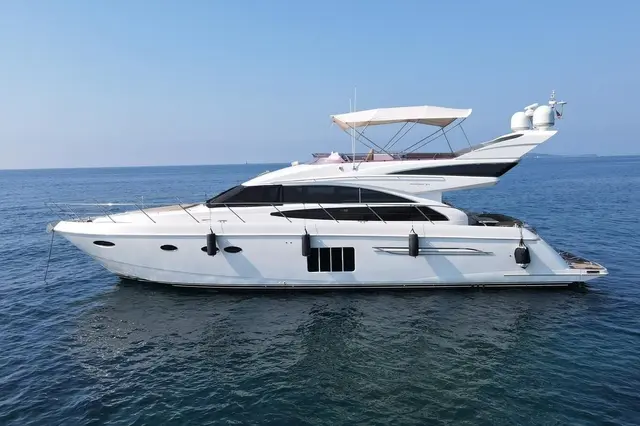
The listed guest figure is the starting point. The 40m Riva 130, the 50m Emerald and the 18.7m Arcadia Sherpa 60 are each listed for 12 guests, while the 20m Princess 64 Fly is listed for 10. A larger group can be split across two days or two vessels. Our range runs from compact day boats to superyachts, so browse our fleet with the headcount already fixed, and keep a margin below the maximum so guests can move comfortably around the vessel.
What should catering look like on a client day at sea?
Catering for a client day works best when it is built around the agenda rather than the menu. Decide whether the group wants a seated lunch at a set time, lighter service between meetings, or a stop ashore, and let the schedule dictate the rest. Dietary and allergy information should reach the broker with the guest list, not on the morning of departure.
Provisioning is normally funded through the APA, the Advance Provisioning Allowance. It is an industry-standard advance that covers items such as fuel, food and port costs on top of the day rate. Ask your broker to explain the day rate and the APA plainly before you confirm. Some hosts pair an onboard lunch with a beach-club stop, which needs coordinating with the venue in advance.
How to host clients on a corporate yacht charter: 5 ways that work
Every well-run client day tends to follow the same five habits.
- Fix the guest list first. Headcount, not preference, decides which yachts are viable, so settle it before comparing vessels.
- Choose the berth for the audience. A visible harbour berth in Cannes suits a showcase, while a quieter anchorage suits a candid conversation.
- Brief catering around the agenda. Give the broker meeting times, dietary needs and drink preferences so service fits the day.
- Plan every transfer. Agree the boarding point, the tender schedule and the return time so guests are never left waiting on a quay.
- Leave a weather margin. Sea conditions can change a plan, so agree an alternative bay or a shorter route in advance.
Which European destinations suit client hosting best?
The French Riviera is the obvious base for a short day: Monaco and Cannes are easy to board, and the coast suits lunch-length hops. The Balearics favour longer, more relaxed days, with Palma de Mallorca as the boarding point and Formentera or Ibiza for anchoring. On the Italian coast, Portofino and Capri suit smaller groups and a slower pace, while Mykonos brings the Greek islands into reach for a multi-day plan.
July and August are the busiest months in harbour, while June and September typically ease crowding, although weather is less predictable. Itineraries that cross borders, such as Monaco toward the Ligurian coast, involve port formalities that a broker plans in advance. See our destination guides and sample itineraries to compare routes.
Plan your charter
The best corporate yacht charter is rarely the one that looks grandest on paper. It is the one where guests step aboard in Monaco or Palma, find the table set and the schedule quietly in hand, and spend the day talking rather than coordinating. Whether the plan is for the 2026 season or a 2027 summer event, the groundwork described here is what makes the hours at sea feel effortless.